





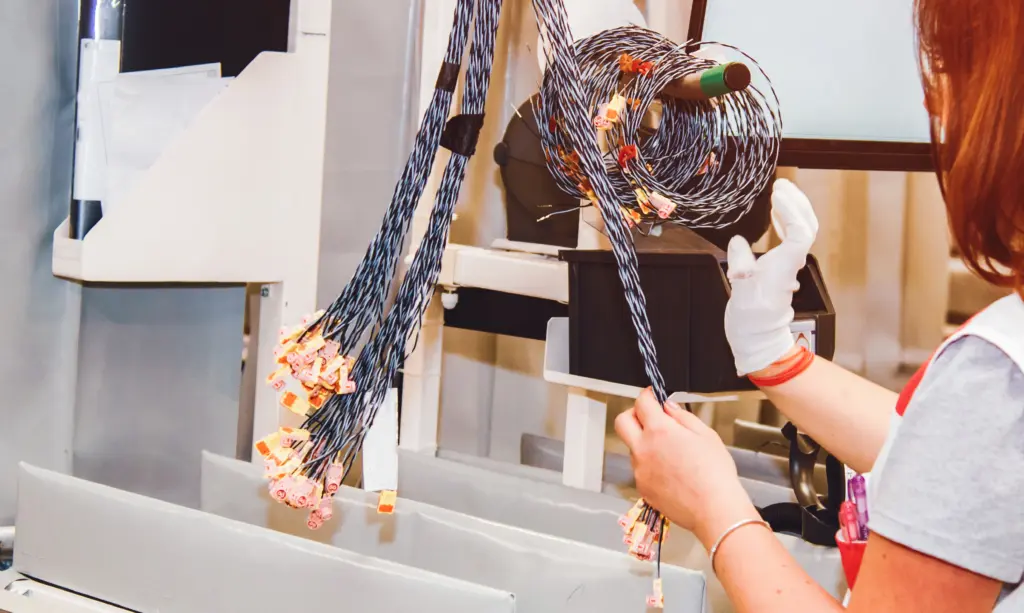
In a wire harness machining center, precise production processes are essential for ensuring the quality and functionality of the final product. These processes help guarantee that wiring harnesses meet the required standards for various applications, whether in automotive, medical, or industrial fields. Below, we outline the critical steps involved in the wiring harness production process, focusing on quality control and best practices.
1. Cutting the Wire
The first step in wiring harness production is cutting the wire to the correct length. It is essential to check the wire type, scale, and ensure the cut is smooth and clean, avoiding any damage to the wire itself. Proper cutting ensures that the wiring harness can function without issues in its intended application.
2. Stripping the Insulation
The next step is stripping the insulation from the wire. It is vital to ensure that the stripping is done smoothly, and the exposed core wire is consistent with the required specifications. The insulation must be removed without damaging the core wire to ensure the integrity of the wiring harness during use.
Inspection: Verify that the peeled section is smooth, with no burrs or inconsistencies in the wire’s exposed area.
3. Tissue and Pruning of the Wire
The wire is then pruned to the correct length. The pruning process needs to be smooth and precise, ensuring the cut is clean without damaging the core wire. Any damage during this step could lead to operational failures later in the wiring harness‘s lifecycle.
- Quality Control: Verify the pruning scale and smoothness of the cut, ensuring no damage to the core wire during the process.
Each stage in the wiring harness production process requires attention to detail and strict quality control to ensure that the wiring harnesses meet the necessary standards for safety, performance, and durability. From cutting and stripping wires to terminal crimping and labeling, every step is essential to creating a high-quality wiring harness that will perform reliably in various applications. By following these steps and performing regular inspections, manufacturers can produce wiring harnesses that meet or exceed industry standards.
4. Semi-stripping the Insulation
In this step, semi-stripping is done to remove part of the insulation. The peeling should be smooth, and the copper wire should not be damaged. The insulator should remain intact to maintain the protective function of the wiring harness.
· Check: Ensure the copper wire is not exposed during this process, and the insulation is not detached incorrectly.
5. Tubing for Insulation
The next stage is the installation of tubing, which provides additional protection for the wiring harness. Ensure that the tubing is the correct size and type, and that it fits securely on the wire without causing damage or obstruction.
6. Soldering Process
Soldering is one of the most critical steps in the wiring harness production process. The temperature of the soldering tin furnace must be carefully controlled to avoid damage to the copper wire. Check that the core copper wire is properly aligned before soldering, and ensure no forks, twists, or burns are present.
Inspection: Ensure that no insulation is burned, the tin point is smooth, and no unsoldered areas are present.
7. Terminal Pressing
In this step, the terminals are pressed onto the wire. It’s crucial to check the alignment and fit of the terminal with the wire. Ensure the insulation and core wire length are correct, and there should be no deformities or errors in pressing.
Quality Control: Ensure the terminal is pressed without skewing, and there should be no overexposed or underexposed core wire.
8. Terminal Piercing
Piercing the terminal involves inserting the wire into the terminal and ensuring it is correctly fitted. Any deformation or damage to the terminal or wire during this process could compromise the wiring harness‘s integrity.
Check: Ensure proper insertion and avoid any insufficient piercing, which could result in poor electrical contact.
9. Wire Crimping
Wire crimping ensures that the wire is securely attached to the terminal. It’s essential to check that the crimp is firmly applied, and the wire direction is correct. Exposed copper or burned sections of the wire should be avoided.
Inspection: Ensure the crimping is done correctly, and the wire is not damaged or exposed during the process.
10. Shrinking Tube Process
After crimping, the shrink tube is applied to provide insulation and protection. It’s essential to check that the shrink tube is correctly shrunk without causing the insulation to burn.
Quality Control: Ensure the shrink tube has shrunk evenly, providing a secure and insulated connection.
11. Assembly of the Shell
The wiring harness shell is then assembled, and it is crucial to check for any errors or damage. The shell must be free of sharp edges, and any loose parts should be securely tightened. Ensure that no leakage points are left unsealed, and check for oxidized or loose screws.
12. Labeling
Labeling the wiring harness is essential for identification and traceability. Ensure that the label content is clear, correct, and legible. Any hyphenation or incorrect labels can lead to confusion during installation or maintenance.
13. Tying the Wiring Harness
The final step is tying the wiring harness to keep the wires securely bundled. Ensure the ties are the correct standard, and check for any cracks, looseness, or improper positioning that could affect the appearance or functionality of the wiring harness.
Quality Control: Inspect the tie’s standard, color, and direction to ensure a neat, organized, and secure wiring harness.