





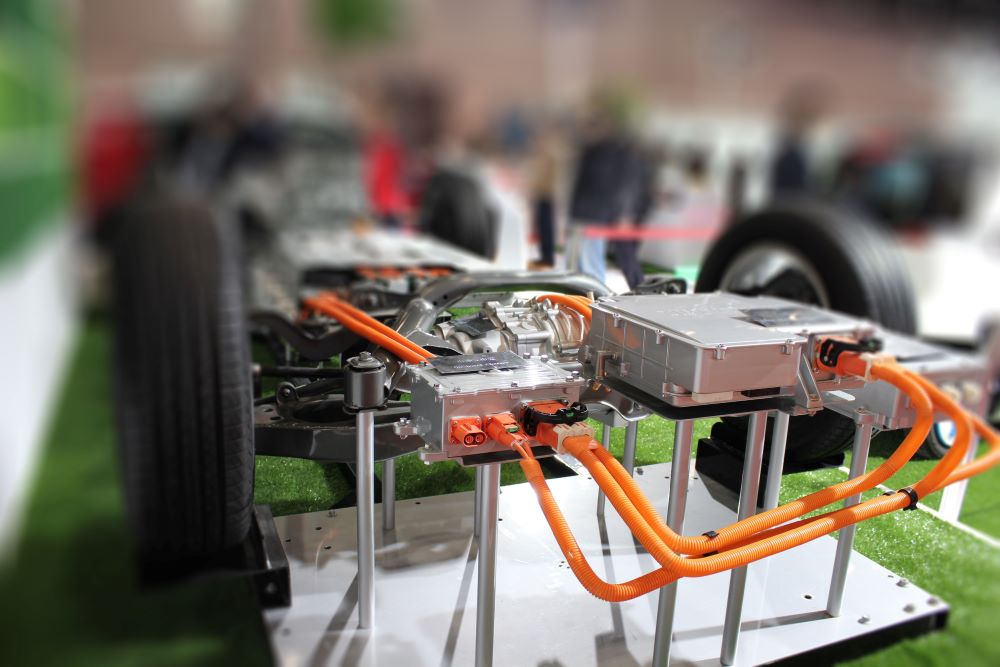
The primary difference between electric vehicles (EVs) and traditional fuel vehicles lies in their reliance on electric components for driving. In EVs, the two core power components are the battery and motor. To achieve higher endurance, EVs typically require a higher power drive motor, which in turn demands a high voltage wiring harness to handle the increased voltage requirements.
Both the battery and motor are responsible for supplying power and enabling the charging process. Additionally, the drive system in EVs needs to convert direct current (DC) into alternating current (AC) via an inverter or converter, or to convert AC back into DC for battery charging. This conversion process relies heavily on a robust and well-designed wiring harness.
During operation, the IGBT (Insulated Gate Bipolar Transistor) in the traction inverter frequently cycles, which produces electromagnetic interference (EMI). As the voltage levels in EVs rise, the severity of EMI increases. This presents a challenge for the design of high voltage wiring harnesses in electric vehicles, which need to address the impact of this interference.
Shielding Methods for High Voltage Wiring Harnesses
To manage electromagnetic interference and ensure safety, high voltage wiring harnesses in new energy vehicles (NEVs) are designed with shielding to either contain or block the EMI. Proper shielding design for wiring harnesses is crucial to limit radiation within a specific area or prevent it from entering sensitive components.
The three main wiring harness shielding methods include:
1. Single-Core Shielding: Each cable within the wiring harness is shielded individually. The connector shielding cover is also integrated into the cable’s sealing range, providing localized protection. This design is common in China and ensures EMI is contained within the shielded area.
2. Overall Shielding: This method involves wrapping the entire wiring harness in a metal braided shield. It offers excellent protection by reducing the chances of EMI escaping the harness and affecting nearby components.
3. Single-Core Single-Strand Shielding: This design focuses on shielding each individual cable, but it is less effective at the connector interface, where EMI can still escape. While this method is simpler, it doesn’t provide as much protection compared to the other two methods.
By adopting the appropriate wiring harness shielding design, manufacturers can ensure that electric vehicles meet stringent safety standards, especially in terms of managing EMI and maintaining system reliability.